lots of these floating around, I have to say, I'm enjoying them - this one is fun! (click on the picture to make it big enough to read)
Showing posts with label homebirth. Show all posts
Showing posts with label homebirth. Show all posts
21 February 2012
what people think...Homebirth
lots of these floating around, I have to say, I'm enjoying them - this one is fun! (click on the picture to make it big enough to read)


27 January 2012
Homebirth upswing in the news again
 Amanda Steen/NPR
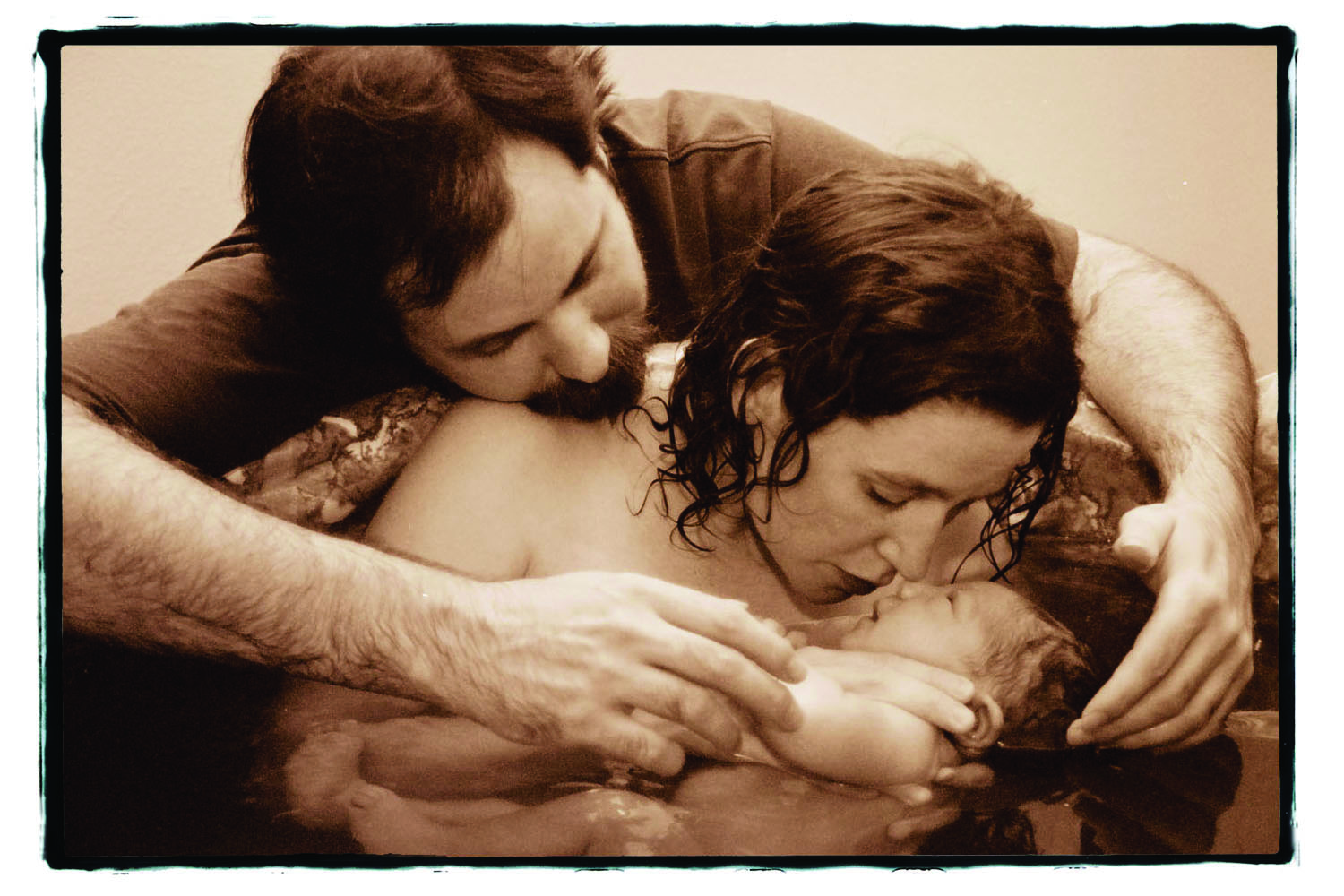
 Shannon Earle holds her new baby Kiera Breen Earle, moments after she was born at their home last year.
You can read about the 29% overall (more for older white women) jump from 2004-2009 on the NPR site, on "All Things Considered", but there is also a handy link where you can listen...nothing soothes me like the clear, melodic and in-depth reporting of NPR.
"It's as safe for women who are at low risk as hospital birth for low-risk women but with significantly reduced rates of preterm birth, low birth weight, unnecessary caesarean sections and also very high rates of maternal satisfaction," says Katherine Prown of The Big Push, which is advocating for legalizing midwives in more states.
Babies born at home were less likely to be born prematurely or underweight, the analysis found. And for many women with uncomplicated pregnancies, home birth can often be a fine alternative, experts say.
27 October 2011

30 July 2010
take that, lame study on home birth dangers!
Home birth has been in the media a lot lately due to a recent study saying that although home birth is safe for low-risk moms, babies born at home had a 3x greater mortality rate. But how did they get that number? The American College of Nurse-Midwives' (ACNM response is great at picking apart the findings...bottom-line, it was a poorly done compilation.
In part, ACNM president, Holly Powell Kennedy, CNM, PhD, FACNM, FAAN, says the study is flawed because,
In part, ACNM president, Holly Powell Kennedy, CNM, PhD, FACNM, FAAN, says the study is flawed because,
They included studies that did not distinguish between planned and unplanned home births. For example, if you had planned a hospital birth, but your labor progressed so quickly that you gave birth before you even made it to the hospital, then you wouldn’t have had a skilled attendant or necessary resources present.
In contrast, a planned home birth means that the woman and her health care provider have determined she is healthy, at low risk for complications, and has the necessary resources in place for a safe birth. By combining the two types of home births, the findings are limited.
Second, a meta-analysis is a way of combining the results of many studies. But in this case, there seems to be no clear reason as to which studies they included versus those they excluded. In fact, they actually did not include the best and by far largest study that's been done—which did not find a higher neonatal mortality rate.
17 April 2009
home as safe as hospital
That's what another study, the largest ever, found about birth. It compares apples to apples, low risk to low risk. It parses the concerns & aspirations of a shift in maternity care in the UK, where the government has pledged to give all women the option of a home birth by the end of this year.
Here's the BBC link where you can also listen to the story. Notice that it says "UK obstetricians welcomed the study..." - one would hope that US OBs welcome it too.
Here's the BBC link where you can also listen to the story. Notice that it says "UK obstetricians welcomed the study..." - one would hope that US OBs welcome it too.
Home births 'as safe as hospital'
The largest study of its kind has found that for low-risk women, giving birth at home is as safe as doing so in hospital with a midwife.
Research from the Netherlands - which has a high rate of home births - found no difference in death rates of either mothers or babies in 530,000 births.
Home births have long been debated amid concerns about their safety.
UK obstetricians welcomed the study - published in the journal BJOG - but said it may not apply universally.
The number of mothers giving birth at home in the UK has been rising since it dipped to a low in 1988. Of all births in England and Wales in 2006, 2.7% took place at home, the most recent figures from the Office for National Statistics showed.
The research was carried out in the Netherlands after figures showed the country had one of the highest rates in Europe of babies dying during or just after birth.
It was suggested that home births could be a factor, as Dutch women are able and encouraged to choose this option. One third do so.
But a comparison of "low-risk" women who planned to give birth at home with those who planned to give birth in hospital with a midwife found no difference in death or serious illness among either baby or mother.
"We found that for low-risk mothers at the start of their labour it is just as safe to deliver at home with a midwife as it is in hospital with a midwife," said Professor Simone Buitendijk of the TNO Institute for Applied Scientific Research.
"These results should strengthen policies that encourage low-risk women at the onset of labour to choose their own place of birth."
Hospital transfer
Low-risk women in the study were those who had no known complications - such as a baby in breech or one with a congenital abnormality, or a previous caesarean section.
Nearly a third of women who planned and started their labours at home ended up being transferred as complications arose - including for instance an abnormal fetal heart rate, or if the mother required more effective pain relief in the form of an epidural.
The NHS is simply not set up to meet the potential demand for home births
Louise Silverton
Royal College of MidwivesBut even when she needed to be transferred to the care of a doctor in a hospital, the risk to her or her baby was no higher than if she had started out her labour under the care of a midwife in hospital.
The researchers noted the importance of both highly-trained midwives who knew when to refer a home birth to hospital as well as rapid transportation.
While stressing the study was the most comprehensive yet into the safety of home births, they also acknowledged some caveats.
The group who chose to give birth in hospital rather than at home were more likely to be first-time mothers or of an ethnic minority background - the risk of complications is higher in both these groups.
The study did not compare the relative safety of home births against low-risk women who opted for doctor rather than midwife-led care. This is to be the subject of a future investigation.
Home option
But Professor Buitendijk said the study did have relevance for other countries like the UK with a highly developed health infrastructure and well-trained midwives.
In the UK, the government has pledged to give all women the option of a home birth by the end of this year. At present just 2.7% of births in England and Wales take place at home, but there are considerable regional variations.
Louise Silverton, deputy general secretary of the Royal College of Midwives, said, the study was "a major step forward in showing that home is as safe as hospital, for low risk women giving birth when support services are in place.
"However, to begin providing more home births there has to be a seismic shift in the way maternity services are organised. The NHS is simply not set up to meet the potential demand for home births, because we are still in a culture where the vast majority of births are in hospital.
"There also has to be a major increase in the number of midwives because they are the people who will be in the homes delivering the babies."
Mary Newburn, of the National Childbirth Trust, said: "This makes a significant contribution to the growing body of reassuring evidence that suggests offering women a choice of place of birth is entirely appropriate."
The Royal College of Obstetricians and Gynaecologists (RCOG) said it supported home births "in cases of low-risk pregnancies provided the appropriate infrastructures and resources are present to support such a system.
But it added: "Women need to be counselled on the unexpected emergencies - such as cord prolapse, fetal heart rate abnormalities, undiagnosed breech, prolonged labour and postpartum haemorrhage - which can arise during labour and can only be managed in a maternity hospital.
"Such emergencies would always require the transfer of women by ambulance to the hospital as extra medical support is only present in hospital settings and would not be available to them when they deliver at home."
The Department of Health said that giving more mothers-to-be the opportunity to choose to give birth at home was one of its priority targets for 2009/10.
A spokesman said: "All Strategic Health Authorities (SHAs) have set out plans for implementing Maternity Matters to provide high-quality, safe maternity care for women and their babies."


08 April 2009
FIVE

Yesterday my youngest, my baby, turned five. It sounds so old - so much older than four. He was so excited that he woke up way early and spent the entire day telling everyone he saw, strangers included!
He had already had his party so he just celebrated with a snack to share at preschool and then we went out to dinner at a Japanese hibachi place the kids love (we call it "the place where they cook in front of you" and it's usually where they want to go on birthdays)...every time the music and lights would indicate that it was someone's birthday (they come & sing), he would get all excited and then concerned that they might forget him. But eventually it was his turn & he loved it!
The night before, we had him sleep with us (pretty common, actually) and I told him his birth story again - how he was born in water at home and seemed to swim up to the surface and how we were the very first people ever to touch him. I told him about how his biggest brother, then six, cut the cord and how he had crawled up my belly and started to nurse all on his own.
Five years ago I was snuggled in bed with this baby boy of mine, resting gratefully, knowing we had been blessed and trusting that I could stay in bed with my baby for days and days while others cared for the household. Third time's a charm.
FIVE - wow!
01 February 2009
on the cusp?
NEW YORK (AP) — With health care costs high on the national agenda, advocates of home births are challenging the medical and political establishments to give midwives a larger role in maternity care and to ease the state laws that limit their out-of-hospital practice.
Pending bills to further this goal have significant backing in several states, which home-birth supporters want to add to the 25 states that already have taken such steps.
Nationally, a group called the Big Push for Midwives marked President Barack Obama's inauguration with an e-mail campaign urging him to ensure that midwives who specialize in home births are included in deliberations on federal health care reform.
"We're at a tipping point now," said Katherine Prown, the Big Push campaign manager. "Home births are still only a small part of the total, but it's poised for growth."
The campaign seeks to emphasize that in this time of economic crisis, home births can be a safe, satisfying and moneysaving option for many women. But it runs into adamant opposition from the American Medical Association and the American College of Obstetricians and Gynecologists.
"Childbirth decisions should not be dictated or influenced by what's fashionable, trendy, or the latest cause celebre," the obstetricians' policy statement says. "Despite the rosy picture painted by home birth advocates, a seemingly normal labor and delivery can quickly become life-threatening for both the mother and baby."
According to the latest federal data, there were only about 25,000 home births nationally in 2006 — most of them assisted by midwives — out of nearly 4.3 million total births.
Midwife-attended home births increased by 27 percent between 1996 and 2006. Home-birth advocates believe the numbers will rise as more states amend their laws to accommodate the practice, which they contend is at least as safe as hospital births for healthy women with low-risk pregnancies.
One of the strengths of the state-by-state campaign is its diversity, Prown said.
"We're one of the few movements that's succeeded in bringing together pro-life and pro-choice activists, liberal feminists and Christian conservatives,
" she said. "In every state we manage to recruit Republican and Democratic co-sponsors who normally would never be on the same bill together." The states are now evenly split on legal recognition of certified professional midwives (CPMs) — those who lack nursing degrees and who account for most midwife-assisted home births.
Half the states have procedures allowing CPMs to practice legally — including five which have taken such steps since 2005. The other 25 states lack such procedures and CPMs are subject to prosecution for practicing medicine without a license.
Depending on legislative decisions, the balance could shift this year. Among the battlegrounds:
_In North Carolina, a House study committee recommended in December that the legislature develop licensing standards for CPMs. The committee said the current system doesn't meet the needs of women who chose non-hospital births because of the "extremely limited supply" of obstetricians and nurse-midwives offering to handle such births.
_In Idaho, advocates who failed previously to get a voluntary licensing bill through the legislature are back with a mandatory licensing bill. State Rep. Janice McGeachin, R-Idaho Falls, says the changes helped persuade the state boards of nursing and pharmacy to drop their opposition. The Idaho Medical Association, which fought the earlier version, has expressed respect for the changes in the bill and is deliberating on whether further changes might produce a version it could accept.
_In Illinois, advocates also are back with a new version of a licensing bill that failed in 2007. Rep. Julie Hamos, D-Evanston, says it toughens qualification standards for CPMs — changes that prompted the Illinois Nurses Association to drop its opposition. The Illinois State Medical Society remains opposed.
"There are many in the legislature who feel a need to have this option — they need to be educated," said Dr. Shastri Swaminathan, the society's president. "We're in strong opposition to licensing midwives who don't have the medical training to provide safe home births."
Cost is a major element in the debate. A routine hospital birth often can cost $8,000 to $10,000, with higher bills for cesarean section deliveries that now account for 31 percent of U.S. births.
Midwives' fees for home births are often less than a third of the hospital cost, in part because the mothers generally don't receive epidural anesthesia or various other medical interventions at home.
For pregnant women, insurance coverage can be a decisive factor in their choice. Many insurers cover care by nurse-midwives in hospitals; coverage is less common for midwives who aren't nurses or who assist with home births.
Many obstetricians acknowledge that the spiraling cost of maternity care and high rate of C-sections are problems.
"But the answer is not to have births at home," said Dr. Erin Tracy, an obstetrician at Massachusetts General Hospital in Boston. "We obviously support women's empowerment, but the No. 1 guiding principle has to be the health and safety of the mother and baby."
The national physicians' groups do support births assisted in hospitals and birthing centers by midwives who've completed nursing school or an equivalent postgraduate program.
The American College of Nurse-Midwives, which represents these midwives, says it differs from the AMA in considering home births a legitimate option for pregnant women. But the college says only nurse-midwives or others with comparable training should be allowed to assist.
"We don't believe it's safe without being integrated into the full health care system," said Melissa Avery, the college's president.
The education standards endorsed by the college would exclude many of the estimated 1,400 certified professional midwives, who often acquire training through apprenticeships.
Jane Peterson of Iola, Wis., is an example. She began a midwife apprenticeship in 1980 and has attended more than 1,330 births since then, many of them before she and her counterparts were legally authorized to practice under a 2005 state law.
Peterson, 56, said she strives to develop collaborative relations with local doctors so that transfers to hospitals go smoothly if risk factors develop. She believes such cooperation should be encouraged nationwide, so more women can feel comfortable about choosing home births.
"People will tell you that you changed their lives," said Peterson, reflecting on the rewards of her job.
"It's hard work — getting up on a cold winter night, going out one more time through the snow. What keeps you going is the recognition women feel — as though they are a different kind of mother when they've been able to give birth their way."
On the Net:
- American College of Obstetricians and Gynecologists: http://www.acog.
org/ - Big Push for Midwives: http://www.thebigpu
shformidwives. org/
09 January 2009
Birth of a Midwife - Cara Muhlhahn on WNYC
Cara Muhlhahn, certified nurse midwife and the author of the memoir Labor of Love: A Widwife’s Memoir (Kaplan Publishing, 2008), discusses the issues around home births and what led her to become a midwife.
They also discuss the other side - the one in fourteen births that are now scheduled.
04 January 2009
Huffington Post on Orgasmic Birth
here - kinda cool!
Although there is natural connection, I assume the writer puts Debra Pascali-Bonaro, director of Orgasmic Birth & Laura Shanley, of the Unassisted Childbirth, movement together in the article because he and his wife had unassisted homebirths. Anyway, the inclusion of the topic on The Huffington Post makes me feel that a certain critical mass is being reached, or at least we are moving in that direction.
03 January 2009
my review:20/20
So I thought the 20/20 segment on Orgasmic Birth was pretty fantastic (but not the show as a whole). I do wish there had been a clear soundbite about how orgasmic birth does not have to mean that actual climax is achieved...they may have said this & I missed it, but I felt the segment seemed to indicate that an actual orgasm was a necessary part of the ecstatic birth experience rather than just the happy icing on the already-awesome birthday cake. Anyway, way to go, Debra!
But I have complaints on the show as a whole (of course!): First, the warning that the Orgasmic Birth segment might be inappropriate - wow - what about giving that warning when showing a highly interventive technocratic birth? That could certainly be more dangerous to one's psyche than seeing some women smiling and laughing.
I know the show was about "extremes" in motherhood but why the need to find such unusual examples to put with Orgasmic Birth? The piece on unassisted birth really pissed me off because they lumped in The Business Of Being Born and all homebirth with unassisted birth. I'm not commenting negatively on people who wish to have UC, but the births they showed, aside from Laura Shanley's birth footage appeared to be from BoBB and attended by midwives (at least one of which was filmed in a hospital birth center, not even at home)...UC is a small portion of homebirth and I think to suggest otherwise is at best misleading and sloppy and serves to reinforce the just-now-changing-for-the-positive mainstream opinion that homebirth is selfish (in fact that was a comment/question posed to Ricki Lake on the homebirth /UC piece last night) and foolhardy. Most people who birth at home do so with extremely qualified medical assistance. I found that segment quite hostile.
Same with the breastfeeding piece - people who are nursing 9 year olds are quite rare & that's why they make the news. But the piece started with a woman nursing 3yo twins - not rare at all, given that the average age of weaning world-wide is 4 years (props to 20/20 for mentioning this)...yet it was still portrayed as though the twins mom was doing something a little bit weird or wrong. And then there was the whole "what does your husband think - isn't he left out sexually" angle that was pretty lame, imho.
The life-like dolls...hmmm - I don't quite know what to say other than the segment made me feel a little sad. And once again, I did not appreciate the created context of "wacky/screw loose people" in which to view Orgasmic Birth & homebirth.
What about you? Please share your reactions!
13 December 2008
Californication
(spoiler alert)
Imagine my surprise when watching the season finale of this Showtime series and seeing a doula! In a minor plot line, the protagonist, Hank, may have gotten an acquaintance pregnant (the show is called Californication - it's very adult stuff) and thus is called to the home birth. The birthing woman is living with her boyfriend, a new age swami guy author, and they are having a waterbirth. She's sitting (very high up - I assume for purposes of being seen well on camera, becasue her position in the water was doing nothing to help her labor!) and is cursing, screaming for drugs and bemoaning changes to her, er, "anatomy"...
The doula says, in a dreamy voice, something like, "Let it go - it's about transcendence" and the birthing woman screams at her somthing like "FU, YOU F'ING DOULA!".
BUT - she has a healthy (dark-skinned, not Hank's) baby boy seconds later. No clue where the midwife was - maybe the swami guy is a doctor? But the reason I see this as more positive than negative is that homebirth on TV & film usually results in "emergency" transport, some sort of chastising for the "crazy" & "selfish", misguided plan and then salvation via cesarean (case in point - The L word - another Showtime show I love about a group of lesbian friends, written by women...that homebirth ended in a c-section...and pissed me off - they really had a chance to say something positive & they went the scary music route instead.) So I can live with someone in transition yelling at her doula...I'm just happy she had a doula and that the non-water-waterbirth happened without the plot requiring near-tragedy.
And you know what they say about press - bad or good, it's people talking.
PS: I love how TV/movies always use some three month old baby covered in red jello and try to pass it off as a newborn! No wonder women are frightened - they think they will be giving birth to a 15 pound baby!
Imagine my surprise when watching the season finale of this Showtime series and seeing a doula! In a minor plot line, the protagonist, Hank, may have gotten an acquaintance pregnant (the show is called Californication - it's very adult stuff) and thus is called to the home birth. The birthing woman is living with her boyfriend, a new age swami guy author, and they are having a waterbirth. She's sitting (very high up - I assume for purposes of being seen well on camera, becasue her position in the water was doing nothing to help her labor!) and is cursing, screaming for drugs and bemoaning changes to her, er, "anatomy"...
The doula says, in a dreamy voice, something like, "Let it go - it's about transcendence" and the birthing woman screams at her somthing like "FU, YOU F'ING DOULA!".
BUT - she has a healthy (dark-skinned, not Hank's) baby boy seconds later. No clue where the midwife was - maybe the swami guy is a doctor? But the reason I see this as more positive than negative is that homebirth on TV & film usually results in "emergency" transport, some sort of chastising for the "crazy" & "selfish", misguided plan and then salvation via cesarean (case in point - The L word - another Showtime show I love about a group of lesbian friends, written by women...that homebirth ended in a c-section...and pissed me off - they really had a chance to say something positive & they went the scary music route instead.) So I can live with someone in transition yelling at her doula...I'm just happy she had a doula and that the non-water-waterbirth happened without the plot requiring near-tragedy.
And you know what they say about press - bad or good, it's people talking.
PS: I love how TV/movies always use some three month old baby covered in red jello and try to pass it off as a newborn! No wonder women are frightened - they think they will be giving birth to a 15 pound baby!
13 November 2008
Baby, You're Home


Check out the almost entirely positive story on home birth in today's New York Times, accompanied by a lovely slideshow online (including the above photos). The article notes a growing home birth surge taking place:
...in 2006 home births accounted for only one-half of 1 percent of the city’s 125,506 reported births. But local midwives say they have been swamped with calls and requests in recent months, in some cases increasing their workload from two, three or four deliveries a month to as many as 10.Of course, I would have loved if the reporter hadn't used loaded words like "grueling ordeal" and "traumatic" and lots of other fear-based language when the families involved seemed not to experience their births like that at all (note to the reporter: check your own preconceptions at the door & just observe/report, please). I wish the cover picture were a more joyful one - it's possible to mistakenly conclude that everyone in the picture is worried. I wish it hit harder on cesarean rates (and the fact that some hospitals hover around or above 50% instead of the already-deplorable national average of 33%) - and by the way, a cesarean is far more than a "procedure", it's major abdominal surgery. I wish the last part, about the AMA's stance, were not entitled "Playing It Safe". But overall, aside from the incongruity of the reporter's editorializing as compared to the facts and stories reported, it's good...
Blessings to all the families who shared their births for this article and to all those who read it and consider their options. When people see the beauty and simplicity that birth can be, especially at home, it is hard to go back to that place of fear and judgment. I hope that is true for many who read the NY Times piece.
15 October 2008
there I go again!

Homebirth at MoMa!
...wait, why would the Museum of Modern Art have an exhibit on homebirth? Um, they don't. When I saw this picture that was just, of course, my first thought. But one of the current special exhibitions is Home Delivery, about pre-fabricated houses. (one I'd totally love to check out - I loves me some architecture, and especially pre-fab building!)
Doh - when will I learn?
03 October 2008
where to birth

I was just speaking with a new client and she said that she really wants a homebirth, but feels her family would flip out if she did that since this is her first baby and is the first grandchild on both sides. Her husband isn't 100% comfortable yet either. Next time she says she wants to birth at home. This time she is doing everyting she can to have as low-intervention a hospital birth as possible. OK.
Yesterday there was a wonderful post on Vancouver Doula about just this subject. Some of it is specific to Canada, but there is lots of good information, so check out the whole post. Lots of it is universal:
-When you are presented with two equally effective treatments, then "best practice" requires that you take into account the patients' preferences (that means HER).
- A 1986 World Health Organisation report concluded that “home is the most appropriate birth setting for most childbearing women. Women (and their attendants) choosing this option must be provided with necessary diagnostic, consultative, emergency and other services as required, regardless of place of birth.” See College of Midwives of British Columbia.
- In 2002, the "Outcomes of planned home births versus planned hospital births after regulation of midwifery in British Columbia" was published in the Canadian Medical Association Journal. The results showed that "women who gave birth at home attended by a midwife had fewer procedures during labour compared with women who gave birth in hospital attended by a physician." "Comparison of home births with hospital births attended by a midwife showed very similar and equally significant differences." The final interpretation of the study was that "there was no increased maternal or neonatal risk associated with planned home birth under the care of a regulated midwife."
--. In September 2007, the UK National Institute for Health and Clinical Excellence issued clinical guidelines (The NICE Intrapartum Care Guidelines) on intrapartum care of healthy women and their babies during childbirth. Under ‘‘key priorities’’ it stated: ‘‘Women should be offered the choice of planning birth at home.’’ Information suggests that for ‘‘women who plan to give birth at home or in a midwife-led unit there is a higher likelihood of a normal birth, with less intervention’’.
Where to give birth, assuming you are healthy, is a personal decision that A LOT of people will give you their opinion on...often times that opinion will be based on *misinformation and speculation when it comes to homebirth or any type of birth really. Unfortunately that's our culture - we mostly have been raised to fear or dread birth and that is a shame. Add to this the fact that the organization comprised of obstetricians (ACOG) in the US has decided to perpetrate a campaign of *disinformation and scare tactics about homebirth and you can see that it gets even trickier to navigate the process of choosing.
What to do? Educate yourself. Perhaps, rather than automatically doing what everyone else expects and wants, get the facts and then mentally try on all your options and see what feels right for you. It may still be hospital birth and that's fine. I would just challenge you to understand that you have an actual choice and then make it consciously.
Of course, the idea of choosing can feel overwhelming. And choosing something that is less common means that you will not only have to overcome outside fears and concerns but perhaps also your own. Wherever feels best and most right to you, in your gut and heart and bones, is where you should give birth. But explore your options based on fact. As the saying goes, "If you don't know what your options are, you don't have any".
In real estate it's all about "location, location, location"; apply that to birth and it's options, options, options. Or as The Clash sang, "Know Your Rights".
* misinformation generally is given by mistake, while disinformation is given to purposely mislead.
14 September 2008
Support for Home Births

In a letter to the editor of US News & World Report, the world's best known doula organization, DONA International, comments on ACOG & AMA's attacks on homebirth. (above image from Ricki Lake's The Business of Being Born) Yeah!
You covered Ricki Lake's controversial documentary about homebirths which instigated a growing battle between the American College of Obstetricians and Gynecologists (ACOG), the American Medical Association (AMA), midwives, and patients ["Ricki Lake Fires Back in Debate on Home Birth," "On Women," usnews.com].
The conflict is about the perceived safety of home births and the use of Certified Professional Midwives (CPM) or "lay" midwives. Last month, the AMA issued a resolution asking for legislation against home births and against "lay" midwives. DONA International, the oldest and largest association of doulas in the world, represents the thousands of women who cherish their ability to choose where they give birth and with whom. We also question the evidence supporting the ACOG and the AMA's statements that "the safest setting for labor, delivery and the immediate post-partum period is in the hospital." The largest, most respected study of home births found that among 5,000 low-risk pregnancies, babies were delivered just as safely at home with a CPM as in a hospital. Because most doulas work with midwives and physicians in a hospital setting, DONA International has no financial interest in the outcome of such legislation called for by the AMA. Our interest is in the scientific evidence and in maintaining the conviction that pregnant women, just as all other patients, are intelligent enough to give informed consent.
Debbie Young
President
DONA International
Jasper, Ind.
08 September 2008
UPDATE: Dr. Phil
 Here's more on the story...apparently the show has tried to recruit the producer & director of the birth documentary, The Business of Being Born for this show condemning homebirth.
One of the associate producers, Judith Sanchez, is working on the project. She solicited Ricky Lake and Abby Epstein to appear on the show and they have declined. If you would like to write to her and give her your opinion, you can email her at judith.sanchez@cbs.com or call her at (323)956-8289.
Note the comment that has a different view of what the show might be like since Dr. Sears will possibly be a guest.
and now for something completely inflammatory

A new low, even for Dr. Phil,who is seeking guests regarding the following:
DO YOU REGRET HAVING A HOME BIRTH?
Did you have a child at your home?
Did you want to have a soothing experience where you were in control and could bond with your child?Did it not go the way you planned?
Do you regret having a home birth?
Do you regret using a midwife instead of going to a hospital?
Did you have your second child the traditional way in a hospital?
If you or someone you know regrets having a home birth please tell us your story below.Be sure to be specific and include details!
My favorite parts: "Did you have your second child the traditional way in a hospital?" & "Do you regret using a midwife instead of going to a hospital?" Um, Phil? I believe you meant to say "customary in North America" rather than "traditional"...birth's move to hospital is fairy recent. And you might want to pull your myopic viewfinder back just a wee bit to look around the world, where homebirth is still completely average in many countries that have better birth outcomes than the US. Also, midwives do work in hospitals too - get at least some basic facts right!
What an ass. For a kinder, more measured response, see here. I don't know if this is still a planned topic - it doesn't seem to be on the website inviting feedback anymore that I can find - but still, I think it's worth knowing that this issue is being turned into fodder for blowhards. I could see having a show on traumatic birth in general (in fact, they are, though in a gross way, judging by the question prompts) and how overuse of medical interventions has been linked to PTSD (post traumatic stress disorder) and depression. Or how about a show on wonderful homebirths? Cheap shot, Phil. Thanks for the reminder of why I don't generally watch daytime TV.
If you would like to let Dr. Phil know how you feel about his angle on this topic, or perhaps your wonderful birth expereince at home or with a midwife wherever, you can email him here.
02 August 2008
Our own birth house


Yesterday we were in the car & were about to drive by the house where we used to live.
As I often do, I said, "say Hi Old House" to the boys.
As we passed, E shouted,
"Hi house where I was born! Mommy - remember when I was born in that house?!" ...Yes I do!
11 July 2008
"Home delvery is a mother's birthright"
OK - lame headline that calls to mind pizza or Chinese food. But nonetheless, it's the headline of an editorial by "Pushed" author, Jennifer Block, in today's New Jersey Star Ledger (along with a huge drawing of a mother and baby). It originally appeared in the Los Angeles Times yesterday under a different (better) headline.
It's worth the read for the opening sentence alone!
It's worth the read for the opening sentence alone!
"You'd think the healthcare establishment would have bigger fish to fry than Ricki Lake. (The 47 million uninsured, maybe?)"Check it out. You can let the Star Ledger know what you think at Eletters@starledger.com
23 June 2008
Home Sweet Home

There is a great new statement on Huffington Post about birth which begins,
"Ladies, the physicians of America have issued their decree: they don't want you having your babies at home with midwives.
We can't imagine why not. Study upon study have shown that planning a home birth with a trained midwife is a great choice if you want to avoid unnecessary medical intervention..."http://www.huffingtonpost.com/ricki-lake-jennifer-block-and-abby-epstein/docs-to-women-pay-no-atte_b_107845.html
Check out two responses to this resolution to limit women’s autonomy in how, where, and with whom they give birth. http://www.pushedbirth.com/ The first is from Canadian physician and researcher Andrew Kotaska, the second is from the National Childbirth Trust in England, where the government is encouraging women to consider home birth!
Home birth not for you? Fine by me. But please, we need to speak out and protect a women's right to choose (her birth place)! Elective cesarean is being held out as a matter of women's choice by the very doctors who seek to deny women the right to choose home birth. This in spite of the fact that home birth is repeatedly shown to be as safe or safer for healthy women than hospital birth - something that can not be said for all cesareans.
http://www.ipetitions.com/petition/birthathome/index.html
Still not convinced?
http://observantmidwife.blogspot.com/2008/06/response-to-acogs-amas-resolve-to.html
Why We Must Stand Together
Subscribe to:
Posts (Atom)


 Posts
Posts