30 January 2010

We gotta fight for our right to...

Passing along this message - I'll be calling - will you?

LADIES of the UNITED STATES of AMERICA!
WHY WAIT for REFORM THAT MIGHT NOT COME?!
What do you think would happen in every woman in the United States who has any type of maternity coverage called their health care insurer to tell them:
PLEASE CALL YOUR HEALTHCARE INSURER ON
FRIDAY, FEBRUARY 5TH. CALL EARLY IN ...THE DAY!


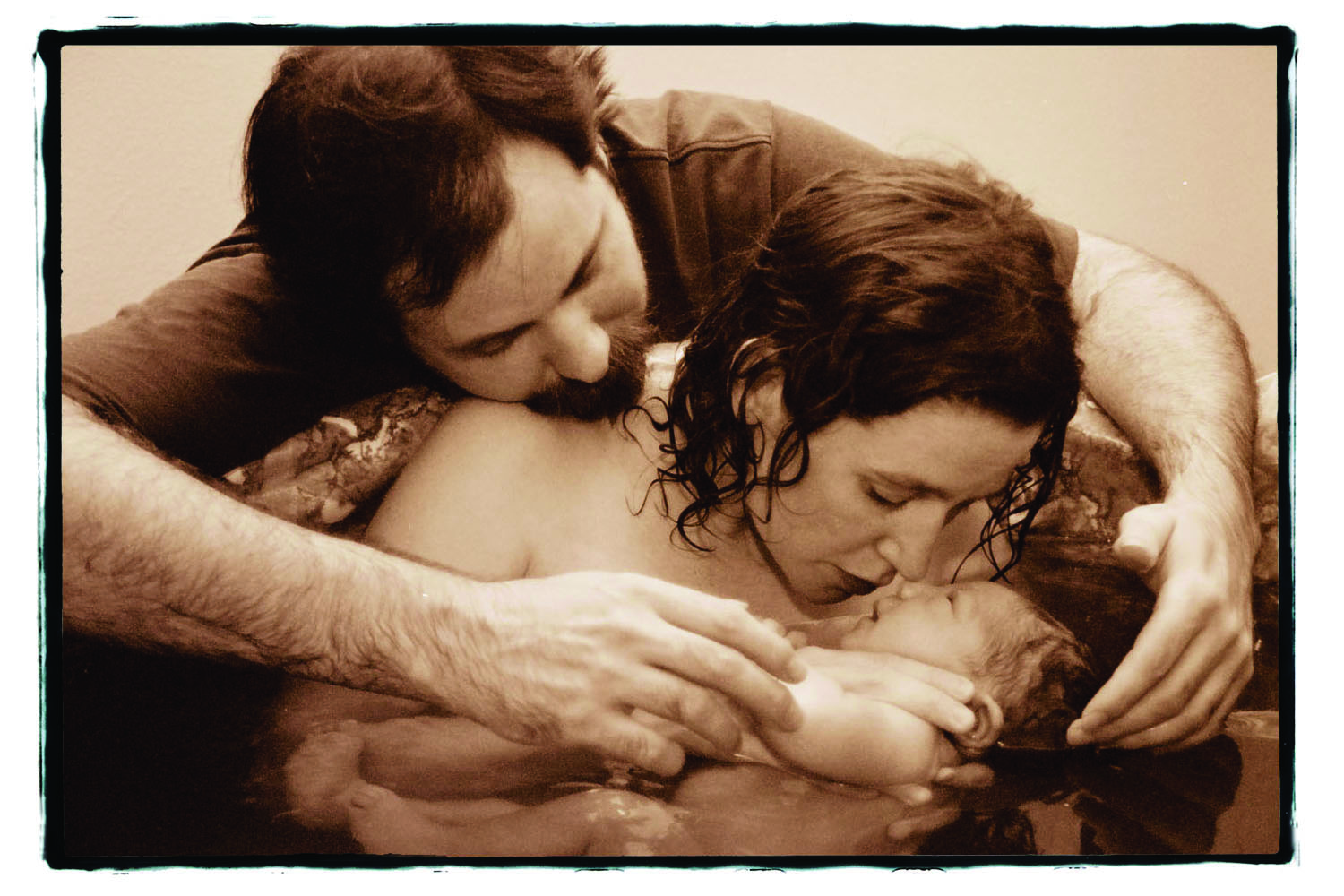
"I WANT SAFE BIRTHING CHOICES FOR HAVING MY BABY OUTSIDE OF HOSPITAL WITH A CERTIFIED PROFESSIONAL MIDWIFE -- AT HOME OR AT A BIRTH CENTER.

WHEN IS YOUR COMPANY GOING TO COVER MY MATERNITY EXPENSES WHERE I WANT TO GIVE BIRTH?"
"I AM PLANNING TO HAVE A BABY NEXT YEAR (OR WHENEVER!) AND I WANT THIS COVERAGE -- SO I'M CALLING YOU & MY EMPLOYER AND MY STATE INSURANCE COMMISSIONER THIS WEEK TO ASK THIS SAME QUESTION & I NEED AN ANSWER BY [ DATE ].

"
What if these insurers were SIMPLY BLASTED with phone calls, faxes, emails, and other contacts? What do you think their response would be?
I don't know -- if we kept it up for about 1 week -- we might actually demonstrate to these huge companies that what women need is important and they need to listen to us! AND it might make Congress sit up & take notice.
And it wouldn't hurt to call your employer's HR department -- remember THEY are the purchasers of these policies -- and be sure that Licensed Midwives, Certified Professional Midwives, and birth outside hospital is covered in ALL STATES.
Don't wait for Congress to MAYBE do this -- DO IT NOW!
"Who ya gonna call?!" -- Always ask for a Case Manager over OB services! NEVER speak to the first person who answer the phone! They are trained to say, "No, that's not covered," or "I don't know."
THEN get the name & direct phone number of the person with whom you spoke.
Let's get it together Ladies -- and DEMONSTRATE OUR BUYING POWER!

"Comparison Shopping has never been more important!'

Joyce Moxley Thomas, MHA, CPM/LM, HCHICertified Professional Midwife/LM239Certified Hypnobabies InstructorCertified Perinatal Massage Therapist
Executive DirectorAmazing Babies Midwifery Education13768 Roswell Ave. #209Chino, CA 91710909-591-2924www.Amazing-Babies.com
AquaNatal Birth Center13768 Roswell Ave. #209Chino, CA 91710909-591-2924www.AquaNatalBirthCenter.com

28 January 2010

winter in NJ

a haiku for today:

whiteout for breakfast
sunshine and blue skies for lunch
what will dinner bring?

follow up: eating & drinking in labor

Today I received a comment from a reader questioning a statement I'd made in an earlier post on new information regarding the ban on eating and drinking in labor. I thought the comment posed a great question worthy of follow up, so thanks Molly.

In my post, I said:
Many hospitals have been advising all laboring women to not eat or drink during labor in case they need emergency surgery with general anesthesia. But isn't that kind of like advising everyone to skip breakfast in case they get hit by a bus?

Molly's comment:
Are the chances of having an emergency C-section really comparable to getting hit by a bus? I've definitely heard of more C-sections than I have bus accidents in the past...
My reply:
Sure, Molly - the chances of having a labor culminate in a cesarean are, possibly, higher than having a random accident (edited to add: I'm guessing here - a less lazy/busy person might add some statistics - chime in if ya got 'em!). However, I think it's VERY important to differentiate between unplanned cesareans and true emergency cesareans. Many woman will call their unplanned cesareans "emergency" when in fact they were actually unplanned and while there was perhaps not an easy-breezy pace, there was likely time for regional anesthesia. I have, luckily, been a part of only one true emergency cesarean in about 400 births.
As I said, the chances of needing energy for labor is 100%...and not having sufficient energy can actually lead to unnecessary cesareans if the laboring woman is unable to carry on or her labor stalls and augmentation of that labor leads to fetal distress. Avoidable cesareans (major abdominal surgeries) pose risks to moms and babies. So the extremely small risk posed by eating in labor is, in my opinion, worth it.
Coincidentally, an OB from a respected hospital in Boston recently quoted in the NY Times used a very similar example and line of reasoning to my bus idea, so I'm comfortable with my statement. I'll post this in a blog entry & try to find the NY Times article too. Thanks for your important question.

best,
Kim

And that NY Times article can be found here if you would like to read the whole thing - there is a good discussion of what all the fuss is about, concern-wise - it is serious, and it's very, very rare. The quote I mentioned:

“My own view of this has always been that you could say one shouldn’t eat or drink anything before getting into a car on the same basis, because you could be in an automobile accident and you might require general anesthesia,” said Dr. Marcie Richardson, an obstetrician and gynecologist at Harvard Vanguard Medical Associates in Boston, who was not connected to the new study.

26 January 2010

got milk?

Jan-25-2010
Urgent Call for Human Milk Donations for Haiti Infants
Salem-News.com

Donor milk provides unique protection for fragile preterm infants, mothers who are willing to donate human milk should contact their regional Mothers’ Milk Bank.


(PORTLAND, Ore.) - The Human Milk Banking Association of North America (HMBANA), United States Breastfeeding Committee (USBC), International Lactation Consultant Association/United States Lactation Consultant Association (ILCA/USLCA), and La Leche League International (LLLI) are jointly issuing an urgent call for human milk donations for premature infants in Haiti, as well as sick and premature infants in the United States.

This week the first shipment of human milk from mothers in the United States will be shipped to the U.S. Navy Ship “Comfort” stationed outside Haiti. “Comfort” is currently set up with a neonatal intensive care unit and medical personnel to provide urgent care to victims of the earthquake.

An International Board Certified Lactation Consultant stationed at the U.S. Navy base in Bethesda, MD is assisting with providing breast pump equipment and supplies to the “Comfort.” Dr. Erika Beard-Irvine, pediatric neonatologist, is on board the “Comfort” to coordinate distribution of the milk to infants in need. HMBANA, USBC, ILCA/USLCA, and LLL are responding to requests to provide milk for both premature infants and at-risk mothers who have recently delivered babies on board the U.S.N.S. Comfort, but an urgent need exists for additional donations.

At the current time, the infrastructure to deliver human milk on land to Haiti infants has not yet been established. As soon as that infrastructure is in place, additional donations will be provided to older infants.

Mothers who are willing to donate human milk should contact their regional Mothers’ Milk Bank of HMBANA. A list of regional milk banks is available at the HMBANA website at www.hmbana.org.

Currently milk banks are already low on donor milk. New milk donations will be used for both Haiti victims as well as to replenish donor supplies to continue to serve sick and premature infants in the U.S. Donor milk provides unique protection for fragile preterm infants.

Financial donations are also strongly encouraged to allow HMBANA, a nonprofit organization, to continue serving infants in need.

UNICEF, the World Health Organization, the Emergency Nutrition Network, and medical professionals all recommend that breastfeeding and human milk be used for infants in disasters or emergencies. Human milk is life-saving due to its disease prevention properties. It is safe, clean, and does not depend on water which is often unavailable or contaminated in an emergency.

Relief workers, health care providers, and other volunteers are urged to provide support for breastfeeding mothers to enable them to continue breastfeeding, and to assist pregnant and postpartum women in initiating and sustaining breastfeeding.

For more information, contact HMBANA at 408-998-4550 or hmbana.org. Additional information can be provided from the United States Breastfeeding Committee at 202-367-1132 (usbreastfeeding.org), ILCA/USLCA at 1-800-452-2478 (www.ilca.org or www.uslca.org), or La Leche League at 847-519-7730 (llli.org).

25 January 2010

Hike for Haiti


We had fun starting our day yesterday with this beautiful hike, enjoying the nature and people of our community...while raising some bucks for people who so need it.

23 January 2010

sachidananda


I just came from a wonderful yoga mini-retreat - just two and a half hours, but very thought provoking (and hard work!), part of a bigger weekend workshop. And all I had to do was go a few blocks from my house and join in. It was an Anusara workshop organized by South Mountain Yoga & facilitated by Ross Rayburn. And it's happening again tomorrow afternoon - there is still some room if you're local & interested! (Maybe you can score a new Ganesh tshirt too)

The thought behind the day was the trinity (he used a fancier word, which I've already forgotten)...he used, in part, the backdrop of Sachindananda, which is part of the Anusara invocation (above).
Sachidananda is a combination of three words:
Sat = existence, truth, real.
Chit = consciousness
Ananda = bliss.
He suggested that in yoga we must first surrender, then reign it in and consider the boundaries before we can once again and more fully surrender. We spent time in each posture playing with the idea that you can't really fly or surrender or get to the bliss with out finding the tension and working with it, fine-tuning it, moving beyond it to a place you wouldn't have gotten to without first acknowledging it. So often we just go to the fullest expression of something, because we can, out of habit or because it's easier than really engaging...like in Uttanasana (standing forward bend) if we make touching the floor the main goal, and flop down there without making sure that our shoulders are engaged, pulling back even as we reach forward.

Like many things, this got me thinking about, what else?, birth. How many times have I told someone in labor to "just surrender" - JUST! Maybe I need to be mindful of the negotiation that must take place between the tension & surrender, allowing a woman to be contained by her body, feeling safe, before surrendering a little and then contained again, and then a deeper surrender. Like when a baby is being born and he turtles back and forth until ready to emerge under the pubic bone and out. Like when it's kinder to a mother's body if she can stay in the place of tension as she stretches, even as she wants to maybe blast out that baby, but allows herself to negotiate the passage, tempering the holding with releasing.

Balance requires choice and mindfulness, but then we get to melt more fully.

22 January 2010

blog for choice day

Unlike me, some people are not falling down on the job today - check out Radical Doula's post, "How About We Call It Blog For Justice Day?"

21 January 2010

hmm - it's as if they are using their brains!

Many hospitals have been advising all laboring women to not eat or drink during labor in case they need emergency surgery with general anesthesia. But isn't that kind of like advising everyone to skip breakfast in case they get hit by a bus? There's a 100% chance that women will need energy for labor...

Well, finally a well-respected organization is calling BS on this (read the full article here) for low risk women:

NEW YORK (Reuters Health) - There is no reason why pregnant women at low risk for complications during delivery should be denied fluids and food during labor, a new Cochrane research review concludes.

..."Women should be free to eat and drink in labor, or not, as they wish," the authors of the review wrote in the Cochrane Library, a publication of the Cochrane Collaboration, an international organization that evaluates medical research....

...Standard hospital policy for many decades has been to allow only tiny sips of water or ice chips for pregnant women in labor if they were thirsty. Why? It was feared, and some studies in the 1940s showed, that if a woman needed to undergo general anesthesia for a cesarean delivery, she might inhale regurgitated liquids or food particles that could lead to pneumonia and other lung damage.

But anesthesia practices have changed and improved since the 1940s, with more use of regional anesthesia and safer general anesthesia...

...And recently, attitudes on food and drink during labor have begun to relax. Last September, the American College of Obstetricians and Gynecologists (ACOG) released a "Committee Opinion" advising doctors that women with a normal, uncomplicated labor may drink modest amounts of clear liquids such as water, fruit juice without pulp, carbonated beverages, clear tea, black coffee, and sports drinks. They fell short of saying food was okay, however, advising that women should avoid fluids with solid particles, such as soup...

...Singata and colleagues systematically reviewed five studies involving more than 3100 pregnant that looked at the evidence for restricting food and drink in women who were considered unlikely to need anesthesia. One study looked at complete restriction versus giving women the freedom to eat and drink at will; two studies looked at water only versus giving women specific fluids and foods and two studies looked at water only versus giving women carbohydrate drinks.

The evidence showed no benefits or harms of restricting foods and fluids during labor in women at low risk of needing anesthesia.

...Singata and colleagues acknowledge that many women may not feel like eating or drinking during labor. However, research has shown that some women find the food and drink restriction unpleasant. Poor nutritional balance may be also associated with longer and more painful labors. Drinking clear liquids in limited quantities has been found to bring comfort to women in labor and does not increase labor complications.


a year later

last year I was riding high, coming back from DC...this year feeling less hopeful after the news from MA...
But tomorrow I will gather with others from the birth community to raise money for Haiti and keep fighting the good fight!

18 January 2010

no more milk


I know it's kind of crazy, but I have not been able to bring myself to throw away the last bag of frozen breast milk...it's WAY expired (since I pumped it in 2005!) but has just been a happy little memento that I would notice every so often when I opened the freezer. Kind of weird, I know. Anyway, today I'm tossing it with a slightly heavy heart...I did, however, get to have a great discussion about breastfeeding with my youngest, since it's really his milk I'm getting rid of.

(Assuming your milk is a bit more current, here are guidelines for storage)

15 January 2010

snippet of motherhood

My middle son spent his birthday at a special indoor water park (at a special overnight rate)...and he took the day off from school. He told me about the opportunity to go with our beloved caregiver's family...he said he was off for MLK day and I explained that it was celebrated Monday...but he made a great argument:

"My birthday is Martin Luther King Jr's birthday and so I think I should celebrate his birthday, and mine, on the actual day"

So I said yes - sometimes it's nice not to say no.

Happy birthday

to my middle one...NINE - wow! And to Martin Luther King, Jr...

Happy birthday sweetie - thinking of you as you were nine years ago!

Hope you had fun on your big day!

14 January 2010

snippet of motherhood


The scene: This morning on the way to school, Oasis' "Wonderwall" is playing on the iPod thingie in the car & I hit replay

My five year old says, "MOM - can you please change the music?! This song is SO irritating!"

Wow - everbody's a critic.

05 January 2010

groundhog day

I often wonder at my ability to fool myself. As I sit here now, about to go to bed, I am sure that I will wake up extra early to tidy up the kitchen etc. before waking the kids...yet I know that there is an equal chance that I will instead hit the snooze many times, be running late & bellowing for us to huuuuurrrrrry!!!

Tonight my middle son, clearly a realist, requested that his oatmeal be prepared and waiting before I wake him so that he can eat right away and without being rushed...

note to self: get it together, lady!

01 January 2010

harder, better, faster, stronger


We just returned from our family ski trip. My oldest, 12, is a great skier and now snowboarder - he started at 4. My middle son, nearly 9 and not yet crossed over to the board side, is now flying over high ramps and sliding rails - he started at 3. My youngest, 5.5, made the biggest strides and graduated from the Magic Carpet up a baby hill to the rope tow to the lifts and even did some intermediate terrain - he started at 2 but took last year off. They all have a need for speed...I think they have that thrill-seeking gene.

I started as an adult in my late twenties. I didn't have the benefit of childhood fearlessness. I always skied very conservatively (read SLOWLY)! I thought I was in decent shape but until this year with the triathlon training and major slimming down, I was not. I used to sweat and huff and puff and felt sore and achy; I assumed this was just part of skiing and still loved it. But this year was amazing...I was truly a better skier and it all seemed effortless. I could ski more aggressively, mostly keep up with my oldest two kids, have much better form and I was never sore. My feet used to cramp from squeezing so much, out of stress and fear I think...no longer.

But the biggest revelation came on the last day, when I was once again waiting for my dad (whom we introduced to skiing the year after we started) and my husband to catch up.

I was waiting for them!

For all the years we have been skiing, they always waited for me, stopped for me, asked me if I wanted a rest. Amazing the difference a year makes. When my dad caught up, I thanked him for his patience all these years. It was a bit bittersweet, like a passing of the torch, but I'm cutting the guy some slack - he did have open-heart surgery eight months ago, so I may have to up my game next year if I want to beat him down the mountain.

So on this first day of a new year, a new decade, I will appreciate that today is truly the first day of the rest of my life. It feels good.

Happy new year!

31 December 2009

profound, beautiful and sad

I heard an amazing story on NPR, "Capturing The Brief Life And Death Of An Infant", from the Obituary Project: Lives Of The Unnoticed.
December 30, 2009 Joanna Blum and Ashley Hutcheson talk about their extraordinary meeting to record the life and passing of Baruch Levi Blum. On Dec. 1, Blum gave birth to Baruch Levi. He weighed 2 pounds, 11 ounces. He lived about 10 minutes. Hutcheson, a photographer, was there to document his birth.

This is obviously sad, and I hesitated to post it but am doing so because I think it's also important to honor passages and there is much to be learned. I have been in that photographer's place and it is powerful and difficult, but ultimately so wonderful for the family to have something of their baby's time on earth.

If you are pregnant, especially, please do think about weather it makes sense for you to listen. You'll know in your gut if it's ok for you.

13 December 2009

postpartum depression in dads

When I meet with expectant parents prenatally or teach a childbirth class, we discuss impacts on marriage, general adjustments and also postpartum depression for the person giving birth. But I will now raise the issue for dads/partners regardless of gender as well. OK - it's not really the same - for postpartum women the depression is generally biochemical, and it was pointed out to me that a new name should be given so as not to take away focus on PPD in birthing women. However, I do think it's helpful for people to know that depression, no matter the cause, can happen for either partner (and has also been noted in adoptive parents) upon such a huge life event. I suggest to everyone, but especially those with a tendency toward depression (or sensitivity to hormones), to have a plan in place in case it becomes an issue. Most people going through even minor depression, combined with sleep deprivation etc., find it overwhelming to have to start from scratch if they need to find a support group or therapist.

from the New York Times:

Mind
Postpartum Depression Strikes Fathers, Too


Article Tools Sponsored By
By RICHARD A. FRIEDMAN, M.D.
Published: December 7, 2009

The pregnancy was easy, the delivery a breeze. This was the couple’s first baby, and they were thrilled. But within two months, the bliss of new parenthood was shattered by postpartum depression.

A sad, familiar story. But this one had a twist: The patient who came to me for treatment was not the mother but her husband.

A few weeks after the baby arrived, he had become uncharacteristically anxious, sad and withdrawn. He had trouble sleeping, even though his wife was the one up at night breast-feeding their new son. What scared her enough to bring him to my office was that he had become suicidal.

Up to 80 percent of women experience minor sadness — the so-called baby blues — after giving birth, and about 10 percent plummet into severe postpartum depression. But it turns out that men can also have postpartum depression, and its effects can be every bit as disruptive — not just on the father but on mother and child.

We don’t know the exact prevalence of male postpartum depression; studies have used different methods and diagnostic criteria. Dr. Paul G. Ramchandani, a psychiatrist at the University of Oxford in England who did a study based on 26,000 parents, reported in The Lancet in 2005 that 4 percent of fathers had clinically significant depressive symptoms within eight weeks of the birth of their children. But one thing is clear: It isn’t something most people, including physicians, have ever heard of.

At first, my patient insisted that everything was just fine. He and his wife had been trying to conceive for more than a year. He was ecstatic at the prospect of fatherhood, and he did not acknowledge feeling depressed or suicidal.

Suspicious of his rosy appraisal, I pushed a little.

It turned out that he had just taken a new high-pressure job in finance six months before the birth of his son. Though he was reluctant to admit it, he clearly had more than a little concern about his family’s financial future.

And he was anxious about his marriage and his new life. “We go out a lot with friends to dinner and theater,” he said wistfully, as I recall. “Now I guess that’s all going to end.”

He had spent the nine months of pregnancy in a state of excitement about being a father without really registering what a life-transforming event it was going to be.

Unlike women, men are not generally brought up to express their emotions or ask for help. This can be especially problematic for new fathers, since the prospect of parenthood carries all kinds of insecurities: What kind of father will I be? Can I support my family? Is this the end of my freedom?

And there is probably more to male postpartum depression than just social or psychological stress; like motherhood, fatherhood has its own biology, and it may actually change the brain.

A 2006 study on marmoset monkeys, published in the journal Nature Neuroscience, reported that new fathers experienced a rapid increase in receptors for the hormone vasopressin in the brain’s prefrontal cortex. Along with other hormones, vasopressin is involved in parental behavior in animals, and it is known that the same brain area in humans is activated when parents are shown pictures of their children.

There is also some evidence that testosterone levels tend to drop in men during their partner’s pregnancy, perhaps to make expectant fathers less aggressive and more likely to bond with their newborns. Given the known association between depression and low testosterone in middle-aged men, it is possible that this might also put some men at risk of postpartum depression.

By far the strongest predictor of paternal postpartum depression is having a depressed partner. In one study, fathers whose partners were also depressed were at nearly two and a half times the normal risk for depression. That was a critical finding, for clinicians tend to assume that men can easily step up to the plate and help fill in for a depressed mother. In fact, they too may be stressed and vulnerable to depression.

And there is the child to think about. Research has clearly shown that maternal postpartum depression can impair the emotional and cognitive development of infants. A father could well buffer the infant from some of the adverse effects of maternal depression — but that is a tall order if he too is depressed.

Dr. Ramchandani, who also followed children for three and a half years after birth, reported that they were affected differently depending on which parent was depressed. Maternal postpartum depression was associated with adverse emotional and behavioral effects in children regardless of sex; depression in fathers was linked only with behavioral problems in boys. (The study did not report on possible effects when both parents were depressed.)

As for my patient, he recovered within two months with the help of psychotherapy and an antidepressant. Afterward, he summed up the situation in just 10 words: “And I thought only women get this kind of thing.”

All too many doctors think so too.

Richard A. Friedman is a professor of psychiatry at Weill Cornell Medical College.

03 December 2009

"BABIES" - a new documentary

Check out the trailer for this new documentary, estimated due date 4/16/10 (in theaters) - looks wonderful...I dare you not to laugh or get misty!

trusting what you read, thinking before you write

a friend (hi Laura) sent me a link to an entry in this social media blog, containing the following quote:

In a Nielsen survey, it was pointed out that 70% of people surveyed believed opinions they read about something online. It was the second highest level of trust people gave (trusting their known friends came first). So, just by writing something down online, 3/4 of the population will believe what is written. If you’re evil, this is awesome. If you’re a good person, this requires a little bit of thought.

Good to consider for blog writers and blog readers...

01 December 2009

local breastfeeding class - NJ

BREASTFEEDING
BASICS

Sat. Dec 5th - 2:00 to 5:00 p.m.

- The Benefits of Breastfeeding
- Starting Off on the Right Path After Delivery
- What to Expect from a Newborn
- Latch & Positioning
- Milk Supply and How Milk is Made
- How to tell if Baby is Getting Enough
- Support from Partner
- Skin-to-Skin and Bonding
$60/couple

Instructor: Danit Wehle, RN, IBCLC
Registered Nurse
International Board Certified Lactation Consultant
For private consultations. Please call 973-866-0039

Contact: Kelli DeFlora,RYT, LMT, CD
To register for class, Please call 973-655-9655
Or register online at www.motherbirthyoga.com

Location: Montclair, NJ